Common Plumbing Problems in Older Baltimore Homes
Galvanized supply lines, failing cast iron drains, and root-choked sewer laterals are the big three in Baltimore's rowhouses. Here's what to watch for and what repairs cost in 2026.
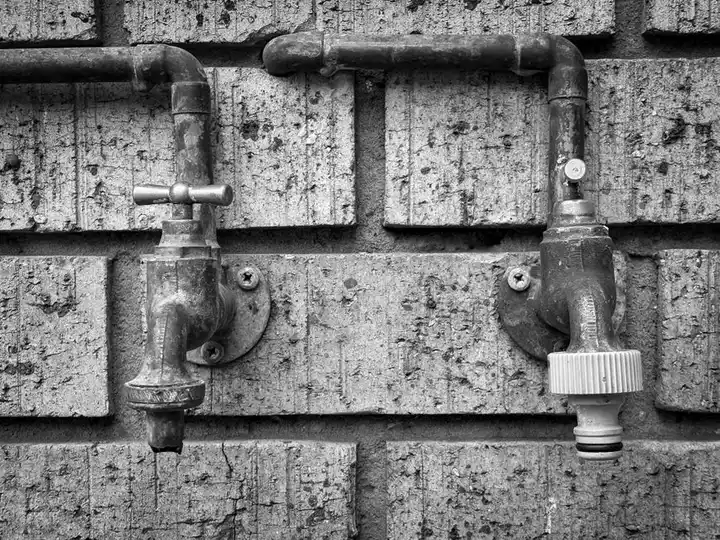
The most common plumbing problems in older Baltimore homes are corroded galvanized steel supply pipes, cracked cast iron drain lines, and sewer laterals clogged by tree roots. These three failures account for the majority of repair calls we run in rowhouses built between 1890 and 1950. If your home predates World War II, you are almost certainly living with at least one of them right now.
Below we break down each problem, how to spot it before it floods your basement, and what repairs cost in 2026. We also cover the mistakes that turn a $400 fix into a $12,000 excavation.
Why Older Baltimore Homes Have So Many Plumbing Problems
Older Baltimore homes were plumbed for a different era of water chemistry, water pressure, and household size. The original builders used galvanized steel for supply lines and cast iron for drains because those were the best materials available at the time. A hundred years later, both have outlived their design life.
Baltimore's water is moderately hard, averaging about 7 to 9 grains per gallon. That mineral content slowly coats the inside of galvanized pipes until a half-inch line closes down to a quarter-inch or less. Meanwhile, the city's mature tree canopy - sycamores, oaks, and maples that have been growing since the 1920s - sends roots straight into the clay joints of old sewer laterals.
Add the freeze-thaw cycles we get every January and February, and you have a plumbing system under constant stress. For homeowners across the region, Plumbing services in Maryland from a team that works on pre-war housing stock every week is the difference between a patch and a real fix.
Galvanized Pipe Problems Baltimore Homeowners Face
Galvanized pipe problems in Baltimore almost always show up as low water pressure, rusty brown water, and pinhole leaks behind walls. Galvanized steel was the standard supply pipe from roughly 1880 to 1960. The zinc coating that protected the steel from corrosion wears away after 40 to 50 years, and once it is gone, the pipe rusts from the inside out.
Here is what that looks like in practice:
- Pressure loss: You turn on the shower and the kitchen faucet drops to a trickle. That is scale and rust choking the line.
- Discolored water: Brown or yellow water on first draw in the morning means the pipe interior is breaking down.
- Pinhole leaks: Small weeping spots on exposed basement pipes that stain the floor or wall.
- Foul taste: Metallic or bitter water, especially from the hot side.
Replacing galvanized pipe is not a patch job. A typical rowhouse has 60 to 120 feet of supply line to replace, and most of it runs through finished walls and ceilings. In 2026, galvanized pipe replacement Baltimore homeowners pay for runs between $4,500 and $12,000 depending on how much wall has to be opened and whether the main line to the meter is included. Copper and PEX are the two standard replacements; PEX costs less and handles Baltimore's hard water without the scale buildup copper eventually gets.
If your home still has galvanized lines, do not wait for a burst pipe in February. A planned replacement costs less than an emergency one every time.
Cast Iron Drain Issues Baltimore Rowhouses Know Too Well
Cast iron drain issues Baltimore rowhouses deal with are usually hidden until they fail - the pipe looks solid from the outside while the inside has rusted into a rough, narrow channel. Cast iron drains installed before 1975 have a 50-to-75-year service life. Most of them are past it.
The warning signs are specific:
- Slow drains throughout the house, not just one fixture
- Dark rust-colored stains on basement floor drains or ceiling joists
- A sewer smell in the basement that does not go away
- Water pooling at the base of a vertical stack
- Recurring clogs in the same line every few months
When a cast iron drain fails, it usually fails at the joint or at a horizontal run where waste sits longest. The pipe cracks, collapses, or shears off entirely. We have pulled sections of 1920s cast iron out of Baltimore basements that looked like wet cardboard.
Repair options range from spot replacement of a failed section to full replacement of the underground line. A spot repair on an accessible horizontal run runs $800 to $2,500 in 2026. A full cast iron sewer line repair Baltimore homeowners need when the pipe has failed under the slab or under the front yard costs $6,000 to $15,000, with trenchless methods at the lower end of that range because they avoid digging up the yard and sidewalk.
How Do I Know If My Baltimore Home Has Old Pipes?
You can identify old pipes in a Baltimore home in about ten minutes with a flashlight and a magnet. Galvanized steel is dull gray, slightly rough, and magnetic. Copper is reddish-brown and not magnetic. PEX is plastic, usually white, red, or blue. Cast iron drains are dark, heavy, and magnetic, and they often have a bell-shaped joint at each connection.
Check these spots:
- The exposed pipes in the basement or crawlspace near the water meter
- Under the kitchen and bathroom sinks, where the shutoff valves connect
- The main stack in the basement - the big vertical pipe running up through the house
- The water heater's inlet and outlet lines
If you see galvanized steel or cast iron anywhere in that list, you have old home plumbing Baltimore contractors deal with daily. The age of the pipe matters more than its appearance. A galvanized line that looks fine on the outside can be 80% blocked on the inside.
One more test: open the lowest faucet in the house and the highest one at the same time. If the upper faucet loses most of its pressure, the supply line is restricted.
Sewer Line Problems in Historic Baltimore Neighborhoods
Sewer line problems in historic Baltimore neighborhoods are driven by two things: aging clay tile laterals and tree roots. The original sewer laterals in neighborhoods like Roland Park, Bolton Hill, and Federal Hill were clay tile with mortar joints. Those joints separate over decades, and roots find them within a season.
Once roots get inside, they act like a net. Grease, wipes, and paper catch on the roots and build up until the line backs up into the basement. You will know it is happening because:
- Multiple drains back up at once
- You hear gurgling in the toilet when the washing machine drains
- The basement floor drain overflows during heavy rain
- You smell sewage in the yard above the lateral
Camera inspection is the only way to know what is actually inside the pipe. We run a camera down the cleanout and can tell you within 30 minutes whether you are looking at roots, a bellied line, a crack, or a full collapse.
If the pipe is cracked or root-damaged beyond cleaning, sewer line replacement in Maryland is the durable fix. Trenchless replacement - pulling a new HDPE liner through the old pipe - typically runs $8,000 to $18,000 in 2026 and avoids tearing up driveways, sidewalks, and mature landscaping. Traditional open-cut replacement can cost less on a short, accessible run but adds restoration costs that often push the total higher.
For homeowners in the city and the surrounding counties, we handle plumbing services in Baltimore including full sewer lateral replacement with camera verification before and after the work.
Water Heaters and Fixtures in Old Baltimore Plumbing Systems
Water heaters in older Baltimore homes tend to fail earlier than the manufacturer's rating because the tank is fighting hard water and, often, high incoming pressure. A tank rated for 12 years frequently gives out at 8 or 9 in a rowhouse with 80 psi at the meter. If your water heater is over 10 years old and you are seeing rust-colored hot water or hearing popping sounds, plan the replacement before it leaks.
In 2026, a standard 50-gallon gas water heater installation in Baltimore runs $1,600 to $2,800 installed, including the expansion tank and code-required venting updates. Tankless units cost more upfront - $3,500 to $6,500 installed - but they last roughly twice as long and eliminate the standby loss that drives up gas bills in a house with a cold basement.
Old fixtures cause their own problems. Original cast iron tubs and 1920s toilets use 3.5 to 7 gallons per flush. Replacing a toilet with a modern 1.28-gallon model cuts water use by more than half. Faucet cartridges in pre-1970 fixtures are often obsolete, so a drip that would be a $15 fix on a new faucet becomes a full fixture replacement.
We install and repair both tank and tankless systems, and we size the unit to the house - not to whatever is on the truck. If you are weighing options, our team handles Water Heater Installation in Maryland with same-week scheduling in most Baltimore-area ZIP codes.
What to Watch Out For When Repairing Old Plumbing
The biggest mistake homeowners make with old plumbing is treating a symptom instead of the system. A few patterns we see repeatedly:
- Snaking a root-clogged sewer without a camera inspection. The clog comes back in 60 to 90 days because the roots are still there. Camera first, then decide.
- Mixing galvanized and copper without a dielectric union. The two metals react and the joint corrodes within a year or two.
- Using chemical drain cleaner on cast iron. The caustic soda eats the already-thin pipe wall. It can turn a $900 repair into a $9,000 replacement.
- Replacing one section of galvanized pipe and leaving the rest. The new section increases pressure on the old pipe downstream and often causes the next leak within months.
- Ignoring a slow basement floor drain. That drain is usually the lowest point in the system. If it is slow, the main line is already restricted.
One more: do not let a contractor start work on a sewer line without a written camera report and a clear price. We give you both before we put a shovel in the ground.
When to Call a Professional
Call a licensed plumber when you see water where it should not be, smell sewage, or lose pressure across multiple fixtures. Those three symptoms point to problems inside walls, under slabs, or in the sewer lateral - places where a DIY fix usually makes things worse.
Maryland Plumbing Pros works on Baltimore's pre-war housing stock every day. We carry the camera equipment, the trenchless tooling, and the parts to handle galvanized, copper, cast iron, and clay tile in the same visit. If you are not sure whether your issue is a $200 fix or a $10,000 one, we will tell you straight after we look at it.
For non-emergency work, we schedule within the week. For burst pipes, sewage backups, and no-hot-water calls, we run Emergency Plumbing Services in Maryland around the clock.
Frequently Asked Questions
What are common plumbing problems in older Baltimore homes?
Galvanized steel supply pipes that corrode and restrict flow, cast iron drain lines that crack after 50 to 75 years, and clay sewer laterals invaded by tree roots. Low pressure, rusty water, recurring clogs, and basement backups are the telltale signs.
How do I know if my Baltimore home has old pipes?
Check the exposed pipes in your basement with a magnet. Galvanized steel and cast iron are magnetic and dull gray; copper is reddish and non-magnetic. If your home was built before 1960 and the pipes have never been updated, assume galvanized supply and cast iron drains.
Should I replace galvanized pipes in my Baltimore home?
Yes, if they are original or more than 50 years old. Replacement in 2026 runs $4,500 to $12,000 for a typical rowhouse. Patching individual leaks on failing galvanized lines usually costs more over five years than a full replacement.
Who fixes old plumbing in Baltimore?
Maryland Plumbing Pros handles galvanized replacement, cast iron drain repair, sewer lateral work, and water heater replacement in Baltimore's older neighborhoods. Call (410) 886-8838 to schedule an inspection.
How long do cast iron drains last in Baltimore rowhouses?
Cast iron installed before 1975 has a 50-to-75-year service life. Most Baltimore rowhouse drains are past that window. A camera inspection is the only reliable way to know whether yours is still sound or already cracked.
Get Help with Plumbing Services in Baltimore
If your Baltimore home is showing any of the warning signs above - rusty water, slow drains, basement backups, or a water heater past its prime - we can diagnose it and give you a straight price before any work starts. Call Maryland Plumbing Pros at (410) 886-8838 to schedule.