How to prepare your plumbing for Maryland winter storms
Maryland winter storms can freeze pipes in hours. Use this checklist to insulate lines, drain exterior faucets, and protect your home before the next deep freeze.
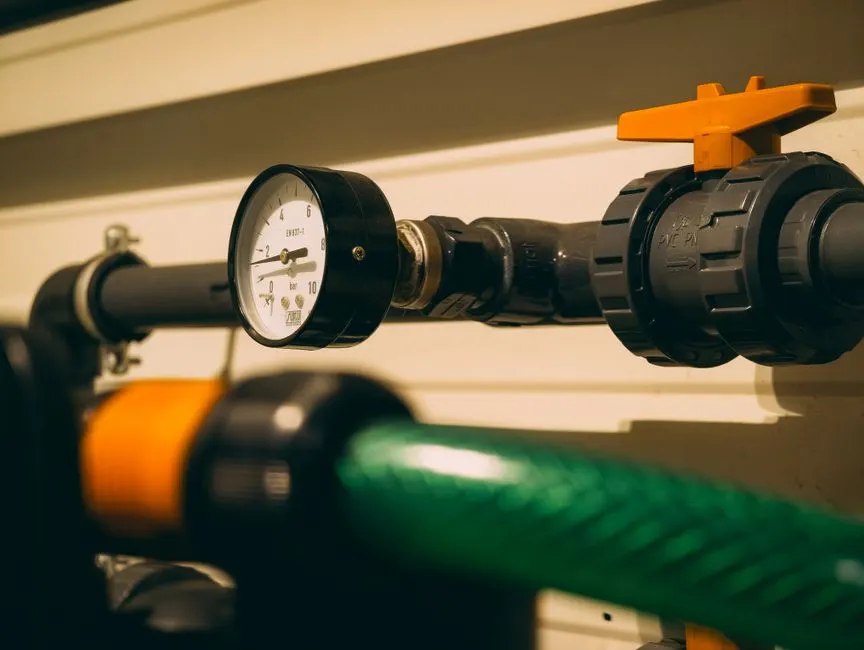
You prepare your plumbing for Maryland winter storms by insulating every exposed pipe, shutting off and draining exterior faucets, sealing crawlspace vents, and keeping a slow drip running on the coldest nights. Those four steps prevent the vast majority of frozen-pipe calls we run between December and March. The rest of this guide covers the exact checklist we use, what to do when a pipe freezes anyway, and the mistakes that turn a $200 repair into a flooded basement.
Maryland sits in a frustrating spot for plumbing. We get enough hard freezes to burst pipes, but not enough sustained cold to keep the ground frozen solid. That swing - 55 degrees on Tuesday, 12 degrees Thursday night - is what cracks copper and splits PEX fittings. As a Plumbing services in Maryland company, we see the same failures every January in the same kinds of houses.
Why Maryland winter storms cause so many pipe failures
Maryland winter storms cause pipe failures because the freeze-thaw cycle here is rapid and repeated, and most of our housing stock has plumbing in unconditioned space. Water expands about 9% when it turns to ice. That expansion has to go somewhere, and the weakest point in the line gives first - usually a joint, a pinhole, or a fitting behind drywall.
Three things make Maryland worse than a lot of colder states:
- Wind-driven cold. A 20 mph wind at 15 degrees pushes the effective temperature on an exterior wall down near zero. Pipes in a north-facing kitchen wall will freeze before the ones in your basement do.
- Crawlspaces and unheated basements. A huge share of homes in Baltimore, Dundalk, Glen Burnie, and the older parts of Towson have open crawlspaces with exposed supply lines. Those lines sit at outdoor temperature.
- Power outages during ice storms. Ice takes down lines, the furnace stops, and a house that was 68 degrees drops below freezing in 6 to 10 hours. That is when pipes in interior walls freeze.
We also see a specific pattern in the older rowhouse neighborhoods - galvanized steel supply lines that have already narrowed from decades of mineral buildup. A half-inch galvanized line with 30% internal scale will freeze and split faster than clean copper because there is less moving water to carry heat. If your home was built before 1960 and still has original supply piping, that is the first thing we check.
Your winter storm plumbing checklist for Maryland
This is the winter storm plumbing checklist we hand to customers in November, before the first hard freeze. Work through it in order - the outdoor items first, because they are the cheapest to fix and the most likely to fail.
Outdoor prep (do this before the first freeze)
- Disconnect every garden hose. A hose left connected traps water in the sillcock and the pipe behind it splits.
- Shut off the interior valve feeding each exterior faucet, then open the outdoor spigot to drain the line. If you have a frost-free sillcock, it still needs the hose removed.
- Drain and blow out irrigation lines and sprinkler systems. A single zone left charged will crack the backflow assembly, which is a $250 to $600 part.
- Cover foundation vents and crawlspace openings with rigid foam board or vent covers. Leave one or two vents cracked for airflow, but block the windward side completely.
- Insulate any exposed pipe in the crawlspace, garage, or unheated basement with foam pipe sleeves. A 6-foot length of 1/2-inch foam sleeve runs about $3 at any hardware store.
Indoor prep
- Locate your main shutoff valve and tag it. If a pipe bursts at 2 a.m., you do not want to be searching with a flashlight.
- Insulate pipes in exterior walls, under vanities on outside walls, and in the attic. Pay attention to the run behind the kitchen sink and any line feeding a bathroom on a north or west wall.
- Open cabinet doors under sinks on exterior walls during cold snaps so warm room air reaches the pipes.
- Set the thermostat no lower than 55 degrees, even when you are away. We get calls every year from people who dropped it to 50 to save money and came home to a flooded hallway.
- Know where your water heater, washing machine hoses, and dishwasher supply lines are. Those are the three most common burst points after a freeze.
Storm-night routine
When the forecast drops below 20 degrees with wind, run a pencil-thin drip from the faucet farthest from your main shutoff. That keeps water moving through the line and relieves pressure if ice starts to form. It costs a few cents in water and prevents a four-figure repair. If you have a Plumbing Repairs in Maryland issue you have been putting off - a slow drip under the sink, a toilet that runs - fix it before the storm, not during it.
How do I prepare my plumbing for a Maryland winter storm?
You prepare by insulating exposed pipes, draining outdoor lines, sealing crawlspace vents, and keeping the heat at 55 degrees or higher. The single highest-value step is pipe insulation in unconditioned spaces - that is where 8 out of 10 of our winter freeze calls originate.
Pipe insulation in Maryland matters more than in a state like Minnesota because our homes are not built for sustained cold. A Minnesota house has deep frost footings and pipes run on interior walls. A 1920s Baltimore rowhouse has a supply line running along an exterior brick wall with nothing between it and the wind. Foam sleeves, heat tape on the worst runs, and a sealed crawlspace do the work the building code never required when that house was built.
If you are not sure which lines are exposed, walk your basement and crawlspace on a cold morning and feel the pipes. Any line that is cold to the touch and sitting in open air needs insulation. We do this inspection as part of our Residential Plumbing Services in Maryland, and it usually takes under an hour.
What should I do if my pipes freeze during a winter storm in Maryland?
If your pipes freeze during a Maryland winter storm, shut off the main water valve, open the nearest faucet, and thaw the pipe slowly with a hair dryer or heat gun on low - never with an open flame. Then watch for leaks as it thaws, because a pipe that froze has often already cracked.
Here is the sequence we walk customers through on the phone:
- Shut off the main valve. If the pipe has split, this limits the flood to what is already in the line.
- Open the affected faucet. This gives melting water somewhere to go and relieves pressure.
- Find the frozen section. It is usually where the pipe runs against an exterior wall or in a crawlspace. Look for frost on the pipe or a bulge.
- Thaw from the faucet end back toward the main. Work warm air along the pipe with a hair dryer, a space heater, or towels soaked in hot water. Never use a torch - you will start a fire inside the wall.
- Watch for leaks. Once water flows, check the whole run. A pinhole leak will show as a drip or a damp spot on drywall.
If you cannot find the freeze point, or if the pipe is inside a wall or under a slab, stop and call us. Thawing a line you cannot see is how people end up with a flooded ceiling. Our Emergency Plumbing Services in Maryland run 24/7 through storm season, and we carry thawing equipment that does the job without opening your walls.
Common mistakes we see after every Maryland freeze
Every January we walk into the same preventable damage. These are the mistakes that cost Maryland homeowners the most money.
- Leaving the hose connected. This is the number one cause of split sillcocks. A $15 hose left on a spigot causes a $400 repair.
- Turning the heat down too far. Below 55 degrees, interior walls on the north side of the house get cold enough to freeze supply lines. The savings on your gas bill are nothing compared to a burst pipe.
- Using a torch or open flame to thaw. Every year, someone burns a house down trying to thaw a pipe. Use warm air only.
- Ignoring a slow drain or a running toilet. A drain line that is partly clogged will freeze faster because the water sits. If your kitchen sink is draining slowly, get it cleared before the cold hits - our Drain Cleaning in Maryland team handles that in a single visit.
- Not knowing where the main shutoff is. In a burst-pipe emergency, every minute the water runs adds thousands of dollars in damage.
- Assuming a new house is safe. We see frozen pipes in 10-year-old construction in Columbia and Frederick just as often as in 1950s homes. Builders run lines in exterior walls everywhere.
When to call a professional
Call a professional when you cannot find the freeze point, when a pipe has already burst, when water is pooling anywhere you can see it, or when the frozen line is inside a wall or under a concrete slab. Those are not DIY jobs, and the damage from guessing is far more expensive than the service call.
We handle winter storm plumbing across the state - from older rowhouses in Plumbing services in Baltimore to newer construction out in Plumbing services in Frederick. Our technicians carry pipe thawing equipment, replacement fittings, and moisture meters so we can find the leak and dry the space in one trip. We quote the price before we start, and we do not leave until the line holds pressure.
Frequently Asked Questions
How do I prepare my plumbing for a Maryland winter storm?
Insulate all exposed pipes in crawlspaces, basements, and garages, disconnect and drain exterior hoses and sillcocks, seal foundation vents, and keep your thermostat at 55 degrees or higher. On nights below 20 degrees, let the farthest faucet drip at a pencil-thin stream. These steps prevent most freeze-related failures.
What should I do if my pipes freeze during a winter storm in Maryland?
Shut off the main water valve, open the nearest faucet, and thaw the pipe slowly with warm air from a hair dryer or space heater. Never use an open flame. Watch for leaks as it thaws, because a frozen pipe has often already cracked. If you cannot reach the freeze point, call a plumber.
How can I prevent frozen pipes during Maryland winter storms?
Foam pipe insulation on every exposed run, heat tape on the coldest lines, sealed crawlspace vents, and a 55-degree minimum thermostat setting prevent most freezes. A slow drip on the farthest faucet during sub-20-degree nights relieves pressure and costs only a few cents per hour.
Who do I call for plumbing emergencies during a Maryland winter storm?
Call a licensed 24/7 emergency plumber - Maryland Plumbing Pros at (410) 886-8838. We run storm-season emergency calls across the state, carry pipe thawing equipment, and can shut down and repair a burst line before it floods your basement or ceiling.
How much does frozen pipe repair cost in Maryland in 2026?
Typical 2026 pricing in this area runs $250 to $600 for a single accessible frozen or split pipe repair, and $800 to $2,500 if the line is inside a wall or requires opening drywall. Emergency after-hours rates add roughly 25% to 40%. Water damage restoration is separate and can run into the thousands.
Get help with Plumbing services in Maryland
If a pipe has already frozen, burst, or you just want your crawlspace and exterior lines inspected before the next storm, we can be there today. Maryland Plumbing Pros handles winter storm prep, emergency repairs, and full winterization across the state.
Call (410) 886-8838 and we will get your water back on and your floors dry.