Sewer line repair vs replacement: which is right for your home?
Repair or replace your sewer line? We break down Maryland costs, pipe lifespan, trenchless options, and the signs that mean replacement is the smarter call.
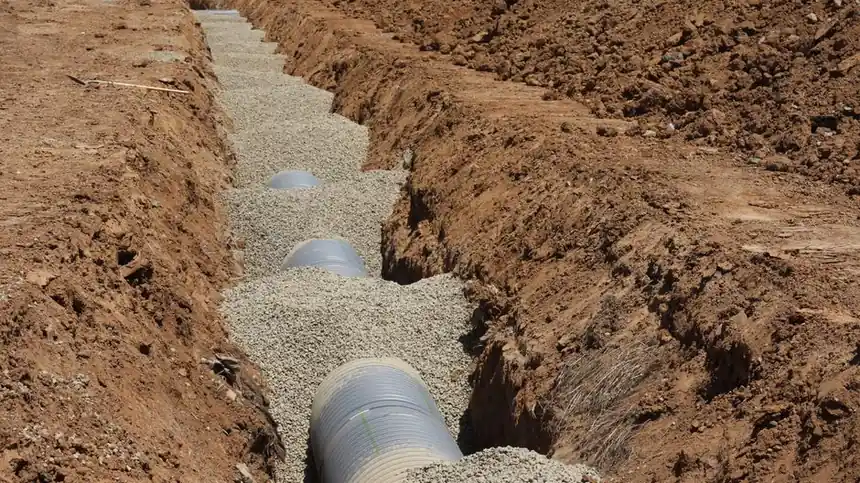
Repair your sewer line if the damage is isolated to one section and the rest of the pipe is sound; replace it if the line is cracked in multiple spots, collapsed, root-invaded along most of its run, or made of old clay or Orangeburg pipe. That is the honest rule of thumb, and it holds for most Maryland homes. The rest of this post shows you how to tell which side of that line your house is on, what each option costs in 2026, and how trenchless methods change the math.
Sewer line repair vs replacement is really a question about how much good pipe you have left. If 80% of the run is healthy, a spot repair buys you years. If the pipe is failing end to end, every repair is a patch on a losing battle. We walk Maryland homeowners through this decision every week, and the answer usually comes down to four things: pipe material, age, the camera footage, and how much of the line is actually damaged.
Sewer line repair vs replacement: the short answer
Sewer line repair is a targeted fix that restores one damaged section of pipe, while sewer line replacement removes the failing line and installs new pipe from the house to the municipal connection or septic tank. Repair is cheaper up front and faster. Replacement costs more but resets the clock on the entire run.
Here is how the two compare on the numbers that matter:
- Typical repair cost: $600 to $4,500 depending on depth and method
- Typical replacement cost: $4,000 to $15,000 for a standard 60 to 100 foot residential run
- Expected lifespan after repair: 3 to 10 years if the surrounding pipe is still good
- Expected lifespan after replacement: 50 to 100 years with PVC or HDPE
- Time on site: repair usually finishes in a day; replacement runs one to three days
The trap most homeowners fall into is treating repair as the safe, conservative choice. It is not always. If your line is 60-year-old clay pipe with roots at three joints, a $2,000 spot repair buys you a season, not a decade. You will be back in the same trench next spring.
How to decide between sewer repair and replacement in Maryland
Maryland's housing stock drives this decision more than anything else. Baltimore rowhouses from the 1920s through the 1950s were built with clay tile laterals. Post-war suburbs in Glen Burnie, Dundalk, and Towson often have Orangeburg pipe - a tar-paper product that deforms and collapses on a predictable timeline. Newer construction in Columbia, Bowie, and Waldorf typically has PVC that rarely fails unless it was installed badly or damaged by roots or settling.
We look at four factors before recommending anything:
- Pipe material. Clay, cast iron, and Orangeburg are replacement candidates. PVC and HDPE are repair candidates.
- Age of the line. Anything past 40 years is on borrowed time, especially clay.
- Camera inspection results. One crack in one spot is a repair. Offset joints, bellies, and roots along 30 feet or more point to replacement.
- Depth and access. A shallow line under a lawn is easy to replace. A line under a finished basement slab or a mature oak changes the cost dramatically.
If you are dealing with a backup right now, our team handles Emergency Plumbing Services in Maryland and can camera the line the same day. If the problem is a slow drain rather than a full blockage, start with Drain Cleaning in Maryland - sometimes what looks like a sewer failure is just a heavy grease or root clog that hydro jetting clears for a few hundred dollars.
Signs you need sewer line replacement in Maryland
Signs you need sewer line replacement in Maryland include repeated backups at multiple fixtures, sewage odors in the yard, sunken or unusually green patches of grass over the line, and gurgling sounds from drains after you run the washing machine. Any one of those is worth a camera inspection. Two or more together almost always means the line is done.
Watch for these specific patterns:
- Multiple backups in a single year. One clog is normal. Three in twelve months is a failing pipe.
- Sewage smell outside, especially after rain. That is groundwater pushing into cracked pipe.
- Slow drains throughout the house, not just one. A single slow sink is a trap issue. Every drain backing up points to the main.
- Foundation or slab cracks near the sewer run. Settling and pipe failure often travel together.
- Rodent or insect activity near the cleanout. Rodents use broken sewer pipe as a highway.
One more thing we see constantly in older Baltimore and Hagerstown neighborhoods: the line was repaired once, then again, then again. Three repairs on the same lateral in five years is the clearest signal that replacement is the cheaper path forward. For homeowners in those areas, our Plumbing services in Baltimore team sees this pattern more than almost any other.
Cost comparison: sewer repair vs replacement in Maryland
Sewer repair cost in Maryland runs $600 to $4,500 for a spot fix, while sewer replacement cost in Maryland runs $4,000 to $15,000 for a full lateral replacement. Trenchless methods sit in the middle: $6,000 to $12,000 for pipe bursting or CIPP lining on a typical residential run. Those are 2026 pricing ranges for the Baltimore-Washington corridor, and they shift with depth, length, and what is sitting on top of the line.
Here is what actually moves the number:
- Depth. A line 3 feet down is a straightforward dig. A line 8 feet down under a driveway is a different project.
- Length. Most residential laterals run 60 to 100 feet. Longer runs cost more per foot.
- Surface restoration. Concrete, pavers, and mature landscaping add cost. Trenchless avoids most of it.
- Permits and inspections. Maryland counties require permits for sewer replacement, and some municipalities require a licensed contractor to pull them.
- Point of connection. Tying into a municipal main versus a septic tank changes the scope.
A repair that costs $1,200 today and fails in 18 months is more expensive than a $9,000 replacement that lasts 50 years. Run the math over a decade, not over a single invoice. That is the whole point of the sewer line decision in Maryland - it is a lifetime cost question, not a today question.
Trenchless sewer line options in Maryland
Trenchless sewer line options in Maryland include CIPP lining, pipe bursting, and slip lining, all of which restore or replace the pipe with minimal digging. CIPP lining inserts a resin-saturated felt tube inside the existing pipe and cures it in place. Pipe bursting pulls a new HDPE pipe through the old one, breaking it outward as it goes. Slip lining slides a smaller pipe inside the old one.
When each one fits:
- CIPP lining: best for pipes that are cracked or root-invaded but still structurally round. Not for collapsed or severely offset pipe.
- Pipe bursting: best when you want a true replacement without excavation. Works on clay, cast iron, and Orangeburg.
- Slip lining: cheapest trenchless option, but it reduces the inside diameter of the pipe, which can matter on long runs.
Trenchless is not always cheaper than open excavation. On a shallow line in an open yard, digging is often the lower bid. Trenchless wins when the line runs under a driveway, a finished patio, a mature tree, or a slab. If you are weighing Sewer Line Repair in Maryland against a full replacement, ask specifically whether trenchless is an option for your run - it changes the cost comparison completely.
What to watch out for
The biggest mistake we see is approving a repair without a camera inspection. A plumber who quotes a fix based on symptoms alone is guessing. You want footage of the inside of the pipe, start to finish, before anyone digs.
Other traps:
- Repairing clay pipe with clay-compatible patches. It works, but you are extending the life of a material that is already past its service window.
- Ignoring the cleanout. If the cleanout is buried or missing, add it to the scope. You will want it later.
- Skipping the permit. Unpermitted sewer work can complicate a future home sale in Maryland.
- Choosing the cheapest bid without comparing scope. Two quotes for "sewer replacement" can mean very different things - one might include restoration, one might not.
- Letting roots back in. After any repair, ask about root treatment or a liner that resists future intrusion.
If you are also dealing with aging fixtures or a water heater on its last legs, it makes sense to bundle the work. Our Residential Plumbing Services in Maryland cover the full range of home plumbing so you are not paying for three separate service calls.
When to call a professional
Call a licensed plumber the moment you have sewage backing up into a tub, a floor drain, or a basement. That is not a wait-and-see situation - it is a health issue and it gets worse fast. The same goes for any sewage smell inside the house, or water pooling in the yard over the sewer run.
Maryland Plumbing Pros handles sewer diagnostics, camera inspections, repairs, and full replacements across the state. We camera the line first, show you the footage, and give you a straight recommendation with upfront pricing before any work starts. If a repair will genuinely solve the problem, we will tell you that. If replacement is the smarter spend, we will show you why on the screen.
Frequently Asked Questions
Should I repair or replace my sewer line in Maryland?
Repair if the damage is isolated and the pipe is PVC or sound cast iron. Replace if the line is clay or Orangeburg, over 40 years old, or damaged in multiple sections. A camera inspection gives you the definitive answer - anything else is a guess.
How much does sewer line repair vs replacement cost in Maryland?
Repair runs $600 to $4,500. Replacement runs $4,000 to $15,000 for a typical 60 to 100 foot residential lateral. Trenchless options sit between at $6,000 to $12,000. Depth, length, and surface restoration drive the final number.
How long does a sewer line last in Maryland?
PVC lasts 50 to 100 years. Cast iron lasts 50 to 75 years. Clay tile lasts 50 to 60 years but often fails earlier from root intrusion and shifting soil. Orangeburg pipe rarely lasts past 50 years and is considered a replacement candidate on sight.
What are signs my sewer line needs replacement in Maryland?
Multiple backups in a single year, sewage odors in the yard, sunken or overly green grass over the line, gurgling drains, and repeated repairs on the same lateral. Two or more of these together almost always means replacement.
Is trenchless sewer repair worth it in Maryland?
Yes when the line runs under a driveway, patio, slab, or mature tree. Trenchless avoids excavation and restoration costs, which can run thousands on their own. On an open lawn with a shallow line, traditional digging is often cheaper.
Get help with Plumbing services in Maryland
Whether you need a camera inspection, a spot repair, or a full sewer line replacement, we can get you a straight answer and a fixed price. Call Maryland Plumbing Pros at (410)886-8838 and we will schedule a diagnostic visit at your home.